Water Contamination: When E-Waste Pollutes Our Most Precious Resource
Ever wondered where all those chemicals from your old electronics end up? Unfortunately, many find their way into our waters—from the streams in our backyards to the groundwater beneath our feet. E-waste doesn’t just linger in forgotten drawers or cluttered landfills—it infiltrates our water sources, posing serious threats to both the environment and our health. Let’s dive into how e-waste contaminates our water and why it should concern everyone.
How Does E-Waste Get Into Our Water?
1. The Landfill Tea Effect 🌧️
Imagine pouring a cup of tea into a teapot, but instead of tea bags, the teapot is filled with layers of old electronics like smartphones, tablets, and obsolete gadgets. Over time, rainwater filtering through these electronic “tea bags” dissolves harmful substances, creating a toxic brew known as leachate. This contaminated liquid seeps through the soil, reaching groundwater aquifers that many communities rely on for drinking water. The result? Hazardous substances like heavy metals and persistent chemicals infiltrate our most vital water sources.
2. Surface Runoff: Nature’s Unwanted Delivery System
When e-waste is improperly stored or discarded, it becomes a ticking time bomb during rainstorms. Rainwater picks up pollutants from these abandoned electronics and carries them away as surface runoff. This polluted water flows into rivers, lakes, and streams, spreading contamination over vast areas. The impact is far-reaching, affecting water bodies used for recreation, irrigation, and as habitats for wildlife. Imagine your favorite fishing spot being tainted with toxins—this is the harsh reality of surface runoff from e-waste.
3. Backyard Chemistry Gone Wrong
Informal recycling operations often use harsh chemicals to extract valuable metals from electronics. Without proper safeguards, these toxic solutions end up in:
- Storm Drains: Carrying pollutants directly into waterways.
- Local Waterways: Polluting rivers, lakes, and streams.
- Groundwater Systems: Contaminating underground water reserves.
What’s In The Water? Common E-Waste Contaminants
| Contaminant | Source | Impact on Water | Health Risks |
|---|---|---|---|
| Mercury | Switches & Screens | Converts to methylmercury | Brain & nervous system damage |
| PBDEs | Flame Retardants | Persist for decades | Hormone disruption |
| Lead | Circuit Boards | Dissolves in acidic water | Developmental issues |
| Cadmium | Batteries | High mobility in water | Kidney damage |
The Ripple Effect: Impact on Life and Ecosystems
Aquatic Life Under Threat
E-waste pollutants are deadly to aquatic organisms. Contaminants like heavy metals and persistent chemicals cause:
- Mortality: Increased death rates among fish and other aquatic life.
- Reproductive Issues: Reduced fertility and malformed offspring.
- Behavioral Changes: Altered behaviors that disrupt ecosystems.
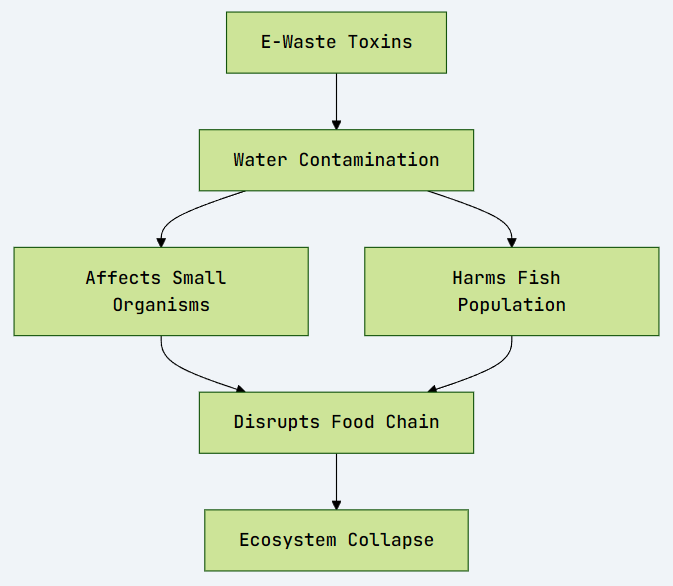
This not only reduces biodiversity but also destabilizes entire aquatic food webs. Sensitive species may decline or vanish from contaminated habitats, leading to cascading effects that weaken these vital ecosystems.
Bioaccumulation and Biomagnification
Toxic substances from e-waste don’t just stay where they land—they move up the food chain. Plants and small aquatic organisms absorb these toxins, and as predators consume these contaminated organisms, the concentration of toxins like mercury and PCBs (polychlorinated biphenyls) increases. This process, known as biomagnification, means that top predators—including the fish we eat—can carry dangerous levels of toxins, posing significant health risks to humans who consume them.
Specific Contaminants and Their Effects
- Mercury: Released from devices like switches, relays, and fluorescent lamps, mercury can transform into methylmercury in water. This potent neurotoxin affects the nervous systems of both wildlife and humans. Consuming fish contaminated with methylmercury can lead to serious health issues, including cognitive impairments and developmental delays.
- Polybrominated Diphenyl Ethers (PBDEs): Commonly used as flame retardants in electronics, PBDEs are persistent organic pollutants that resist degradation. They accumulate in aquatic organisms, disrupting hormonal systems and causing thyroid dysfunction and developmental problems in wildlife and humans.
- Lead and Cadmium: Even at low concentrations, these metals are toxic to aquatic life. Lead can cause anemia and neurological dysfunction in fish, while cadmium damages gills and impairs growth and reproduction. Their presence in water bodies makes the environment hostile for many forms of aquatic life.
Real-World Impact: Case Studies
Great Lakes Region
Despite their vastness, the Great Lakes are not immune to the impacts of e-waste. Pollution from improper e-waste disposal in surrounding areas contributes to the accumulation of toxins in these critical water bodies. Scientists have found:
- Rising mercury levels in fish.
- PBDEs in lake sediments.
- Microplastics from electronic debris.
Ongoing efforts aim to monitor and reduce the input of hazardous substances, but the battle against contamination is far from over.
Urban Stream Syndrome
In 2024, researchers discovered that urban streams near e-waste processing facilities contained:
- 5x Normal Heavy Metal Levels: Significantly higher than natural background levels.
- Reduced Fish Populations: Due to toxic environments.
- Contaminated Sediments: Leading to long-term ecosystem damage.
These findings highlight the urgent need for better e-waste management practices in industrial areas to protect both aquatic life and human communities.
The Human Cost
Health Impacts
- Contaminated Drinking Water: Exposure to toxins like lead and mercury can result in chronic health issues, including cancer, organ damage, and cognitive impairments.
- Tainted Fish and Seafood: Consuming contaminated aquatic life can cause serious health problems, especially in vulnerable populations like children and pregnant women.
- Recreational Water Hazards: Swimming and other water activities in contaminated areas can lead to direct exposure to harmful substances.
Economic Toll
- Water Treatment Costs: Cleaning contaminated water sources requires significant financial resources.
- Lost Fishing Revenue: Declines in fish populations negatively impact the fishing industry.
- Decreased Property Values: Areas with polluted water sources may see reduced real estate values.
- Tourism Impacts: Polluted water bodies deter tourists, affecting local economies dependent on tourism.
Regulatory Considerations
Resource Conservation and Recovery Act (RCRA)
The RCRA governs the disposal of hazardous waste, including certain types of e-waste. Strong enforcement of these regulations is essential to prevent the contamination of water resources and ensure that hazardous materials are managed responsibly.
Safe Drinking Water Act
This act protects the quality of drinking water in the United States. Contamination from e-waste underscores the need for stringent controls and proactive measures to safeguard groundwater and surface water sources from hazardous pollutants.
Taking Action: How You Can Help Reduce E-Waste Dangers
What You Can Do
- Never Dump Electronics in Regular Trash: Always use designated e-waste recycling centers.
- Use Certified E-Waste Recyclers: Ensure your electronics are handled by professionals.
- Support Water Protection Policies: Advocate for stronger regulations to prevent water contamination.
- Report Illegal Dumping: Help authorities identify and stop improper e-waste disposal.
- Spread Awareness in Your Community: Educate others about the dangers of e-waste and the importance of proper disposal.
Looking Forward
The good news? We can prevent water contamination from e-waste through proper management and recycling. Every device properly recycled is one less threat to our water resources. By taking collective action, we can protect our invaluable water sources for future generations.
💡 Did You Know? Just one ton of e-waste can produce up to 200 pounds of lead, 50 pounds of mercury, and 40 pounds of cadmium, all of which can infiltrate our water systems if not properly managed.
The Bottom Line
E-waste poses a significant threat to our water resources, infiltrating everything from groundwater to expansive lakes and rivers. The contamination from discarded electronics can lead to devastating impacts on aquatic ecosystems, human health, and local economies. By understanding these pathways and their consequences, we can take informed actions to manage e-waste responsibly and protect the water that sustains us all.
Stay tuned as we continue to explore the other facets of e-waste contamination, including its impact on our air and the steps we can take to mitigate these environmental threats.