The Importance of Responsible E-Waste Management
Proper e-waste management isn’t just a buzzword—it’s a vital practice that safeguards our environment and health while supporting economic growth and sustainable development. As our reliance on electronic devices grows, so does the challenge of handling their inevitable disposal. Let’s delve into why managing e-waste responsibly is so crucial.
Protecting the Environment
When e-waste is mishandled, toxic substances like lead, mercury, and cadmium can seep into our soil and water, causing long-term environmental damage. Responsible management ensures these hazardous materials are contained and prevented from contaminating ecosystems. Additionally, by recycling valuable materials such as gold, silver, and rare earth elements, we reduce the need for environmentally destructive mining activities. This not only conserves natural resources but also minimizes habitat destruction and preserves biodiversity.
- Preventing Pollution:
- Hazard Containment: Ensures that toxic substances do not leach into the environment.
- Ecosystem Preservation: Protects wildlife and natural habitats from contamination.
- Resource Conservation:
- Material Recovery: Allows for the extraction and reuse of valuable materials like gold, silver, copper, and rare earth elements.
- Reduced Mining Impact: Decreases the environmental degradation associated with mining raw materials.
Quick Fact: Recycling just one million laptops saves the energy equivalent of the electricity used by over 3,500 U.S. homes in a year, highlighting the significant benefits of proper e-waste management.
Promoting Human Health
Improper disposal of e-waste poses significant health risks. Communities near dumping sites often face exposure to dangerous chemicals, leading to a rise in toxicity-related illnesses. Workers involved in informal recycling processes are particularly vulnerable to harmful substances. By managing e-waste responsibly, we protect both local communities and global populations from these health hazards, ensuring safer living and working environments.
| Health Benefit | Impact |
|---|---|
| Reduced Exposure | Protects communities from toxic substances |
| Worker Safety | Ensures safe handling conditions for recycling workers |
| Global Health | Prevents harmful exports to developing countries |
| Disease Prevention | Reduces risks of conditions linked to toxic exposure |
- Exposure Reduction:
- Protecting Communities and Workers: Minimizes the risk of exposure to hazardous substances during disposal and recycling processes.
- Global Health: Prevents the transfer of health risks to developing countries through illegal e-waste exports.
- Disease Prevention:
- Lowering Incidence of Toxicity-Related Illnesses: Proper handling reduces the prevalence of ailments caused by exposure to heavy metals and toxic compounds.
Boosting the Economy
E-waste recycling isn’t just good for the planet—it’s also a boon for the economy. The recycling industry creates numerous jobs in collection, processing, and materials recovery. Moreover, recovering and reselling precious metals and other materials can be economically beneficial, reducing the costs associated with raw material extraction and lowering overall production expenses. This economic efficiency supports sustainable growth and innovation within the industry.
- Job Creation and Economic Growth:
- Recycling Industry: Generates employment opportunities in recycling facilities, materials recovery, and secondary markets.
- Economic Efficiency: Recovers valuable materials for resale, reducing costs related to raw material extraction.
- Cost Savings:
- Preventing Expensive Cleanups: Avoids expenses associated with environmental cleanups.
- Reducing Healthcare Costs: Lowers healthcare expenses resulting from pollution-related illnesses.
Fun Fact: The global e-waste recycling market is expected to reach $50 billion by 2027, showcasing the growing economic potential of responsible management.
Ensuring Regulatory Compliance and Ethical Responsibility
Adhering to e-waste regulations is not only a legal obligation but also an ethical one. Compliance with laws like the Resource Conservation and Recovery Act (RCRA) and various state-specific regulations prevents illegal dumping and the harmful export of e-waste to countries with lax environmental protections. Furthermore, companies embracing Extended Producer Responsibility (EPR) demonstrate their commitment to ethical practices by designing products for easier recycling and reducing the use of hazardous substances. This responsible approach fosters trust and showcases dedication to environmental stewardship.
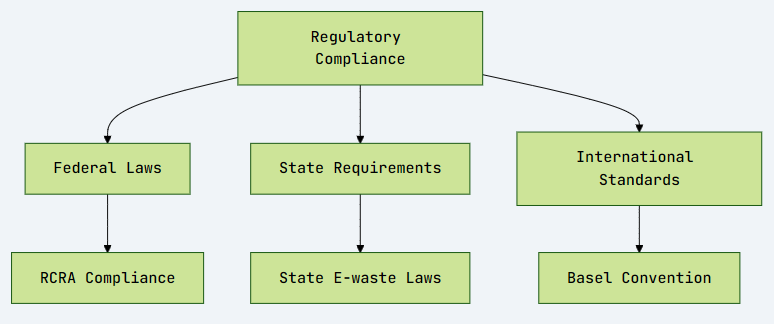
- Adherence to Laws:
- Federal and State Regulations: Compliance with the Resource Conservation and Recovery Act (RCRA) and state-specific e-waste laws is mandatory.
- Avoiding Penalties: Proper management prevents legal consequences and fines associated with improper disposal.
- Corporate Social Responsibility:
- Extended Producer Responsibility (EPR): Encourages manufacturers to take back their products, design for easier recycling, and reduce hazardous substance use.
- Ethical Considerations: Companies demonstrate commitment to environmental stewardship and public health.
Building a Sustainable Future
Responsible e-waste management is crucial for promoting a circular economy, where products are designed to be reused, repaired, and recycled, minimizing waste. This shift from a linear “take-make-dispose” model encourages innovation in sustainable product design and recycling technologies. By closing the loop, we not only reduce environmental impact but also drive technological advancements that support long-term sustainability.
- Circular Economy Promotion:
- Closing the Loop: Recycling e-waste supports a shift from a linear “take-make-dispose” model to a circular economy where materials are continually reused.
- Innovation Incentives: Drives technological advancements in sustainable product design and recycling technologies.
- Climate Action:
- Emission Reductions: Proper e-waste recycling reduces greenhouse gas emissions associated with raw material extraction and processing.
- Protecting Biodiversity: Minimizes habitat destruction and pollution that threaten species worldwide.
Raising Public Awareness and Education
Educating the public about the dangers of e-waste and the benefits of proper recycling is essential for fostering responsible behaviors. Community engagement initiatives and accessible recycling programs make it easier for individuals to participate in e-waste management. When people understand the impact of their actions and have convenient options for disposal, participation rates increase, leading to more effective e-waste management on a broader scale.
- Community Engagement:
- Educational Initiatives: Raising awareness about the harms of e-waste and the benefits of recycling encourages responsible consumer behavior.
- Accessible Recycling Programs: Providing convenient options for e-waste disposal increases participation rates.
Mitigating Global Environmental Impact
Effective e-waste management contributes significantly to combating climate change by reducing greenhouse gas emissions associated with raw material extraction and processing. Additionally, it protects global biodiversity by minimizing pollution and habitat destruction. By addressing e-waste responsibly, we play a part in preserving our planet for future generations and maintaining the delicate balance of our ecosystems.
- Global Environmental Impact:
- Climate Change Mitigation: Emission reductions from recycling lower the overall carbon footprint.
- Protecting Biodiversity: Minimizes pollution and habitat destruction, safeguarding species worldwide.
Innovation and Progress
Responsible e-waste management drives the development of new recycling technologies, improvements in product design, and advances in material recovery methods. This continuous innovation not only enhances the efficiency of recycling processes but also fosters sustainable product development, ensuring that future electronics are easier to recycle and less harmful to the environment.
- Technological Advancements:
- New Recycling Technologies: Enhances the efficiency and effectiveness of e-waste processing.
- Sustainable Product Design: Encourages the creation of electronics that are easier to disassemble and recycle.
- Material Recovery Methods: Improves the extraction and reuse of valuable materials from e-waste.
Looking Ahead
As technology continues to advance, the volume and complexity of e-waste will only increase. Adopting responsible management practices today sets the foundation for a sustainable future where electronic innovation and environmental protection go hand in hand. By prioritizing proper e-waste disposal, we can mitigate environmental threats, protect human health, and foster economic growth, ensuring a healthier planet for generations to come.
Proper e-waste management is a shared responsibility that requires collective effort from consumers, businesses, governments, and communities. By understanding its importance and committing to responsible practices, we can tackle the challenges of e-waste and pave the way toward a more sustainable and prosperous future.